
Software built for how fish farming actually works in Odisha
Pond-by-pond stock, feed, water quality, cost and sales records for fish and shrimp farms.
Built for: Fish and shrimp farms, aquaculture cooperatives, hatcheries and fisheries federations
The problems this solves
- Records live in notebooks, so nobody can compare this season with the last one
- Feed cost per pond is unknown until the season ends
- Water quality is checked but never logged, so patterns are invisible
- Cooperative members' dues and shares are tracked on paper
- Mortality is noticed late because there is no daily record to compare against
Why this exists
Aquaculture in Odisha runs on notebooks. A farmer knows their ponds intimately and still cannot answer, at the end of a season, which pond made money and which one quietly lost it — because feed went out of one store for six ponds, mortality was noticed but never written down, and last season’s numbers are in a different book.
The gap is not knowledge. It is records that can be compared.
Built around the pond, not the office
Every entry belongs to a pond. Stocking date, species, seed source, feed issued, mortality seen, water readings taken, and what was eventually harvested and sold. Once a season has run, the cost per kilogram for each pond is arithmetic rather than guesswork.
Daily entry takes under a minute on a phone and works in Odia. The person at the pond enters four or five numbers. Everything else is derived.
Where it fits in Odisha
Brackish-water culture across Balasore, Bhadrak, Kendrapara and Jagatsinghpur, the Chilika belt in Puri and Ganjam, and freshwater operations inland. Cooperatives and fisheries federations managing many members get per-member records without collecting paper from each one.
An honest scope note
This manages the farm and its records. It does not predict disease, guarantee yield, or replace the judgement of someone who has worked water for twenty years. What it does is make sure that judgement is informed by what actually happened last season, rather than by what everyone remembers happening.
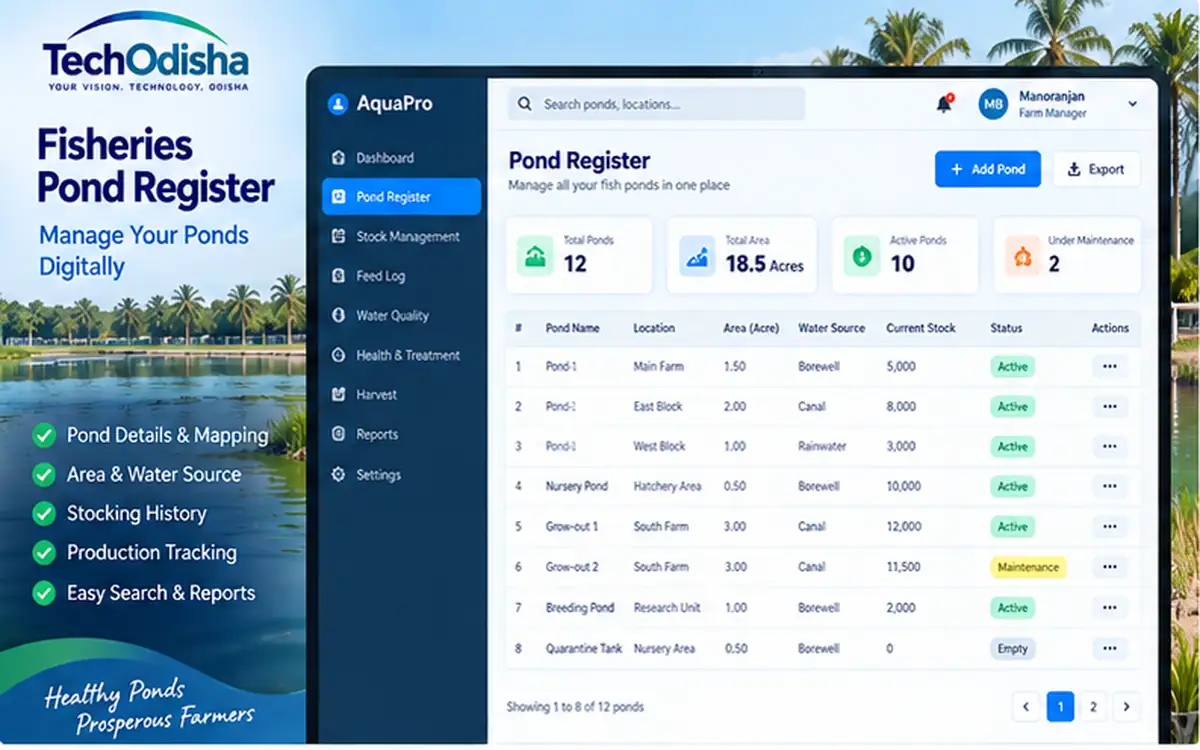
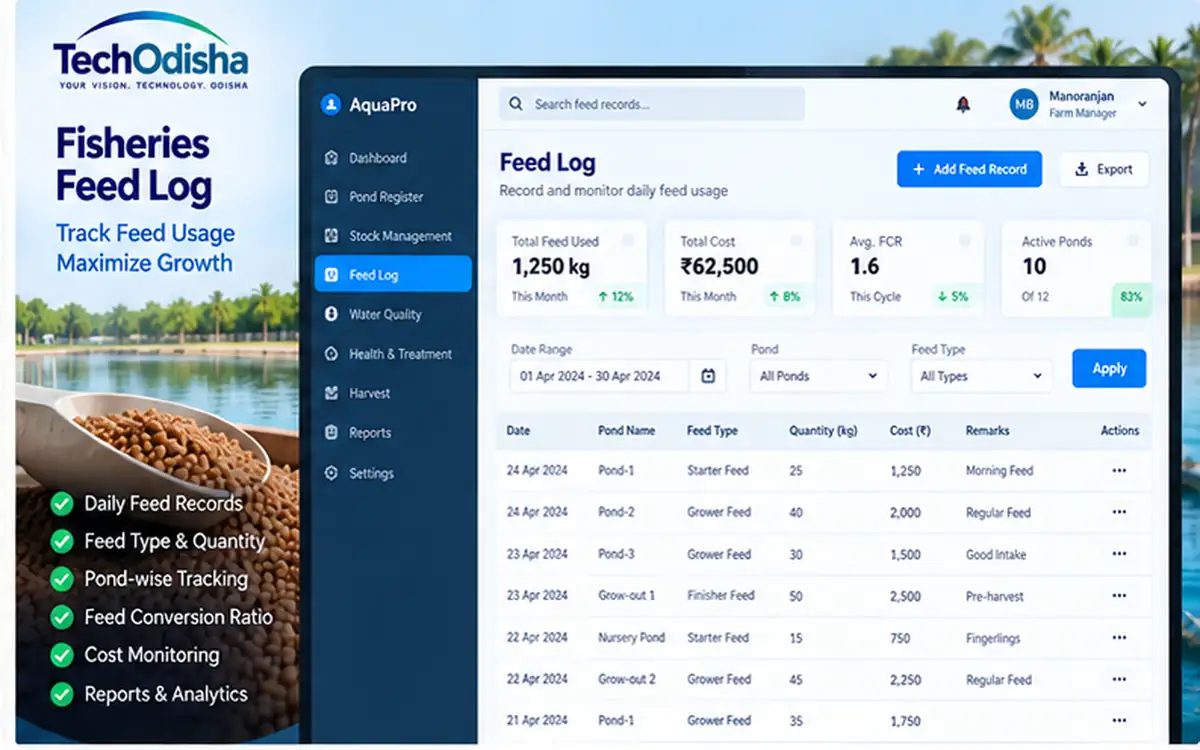
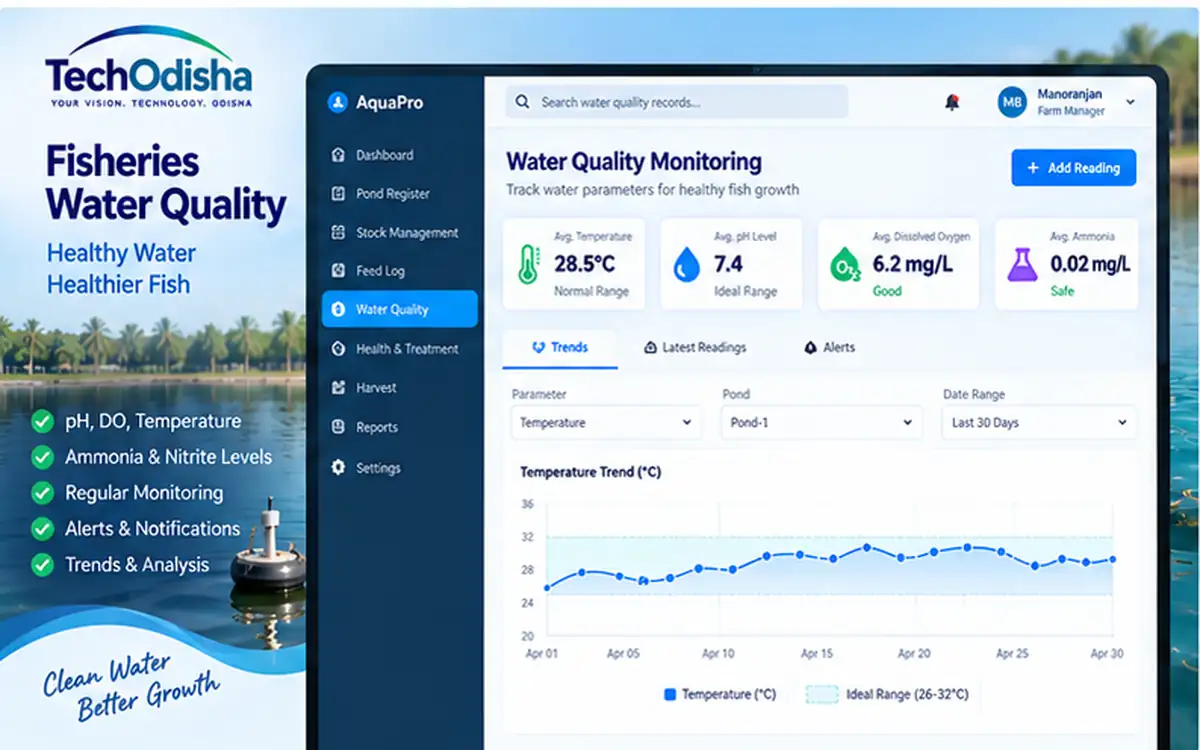
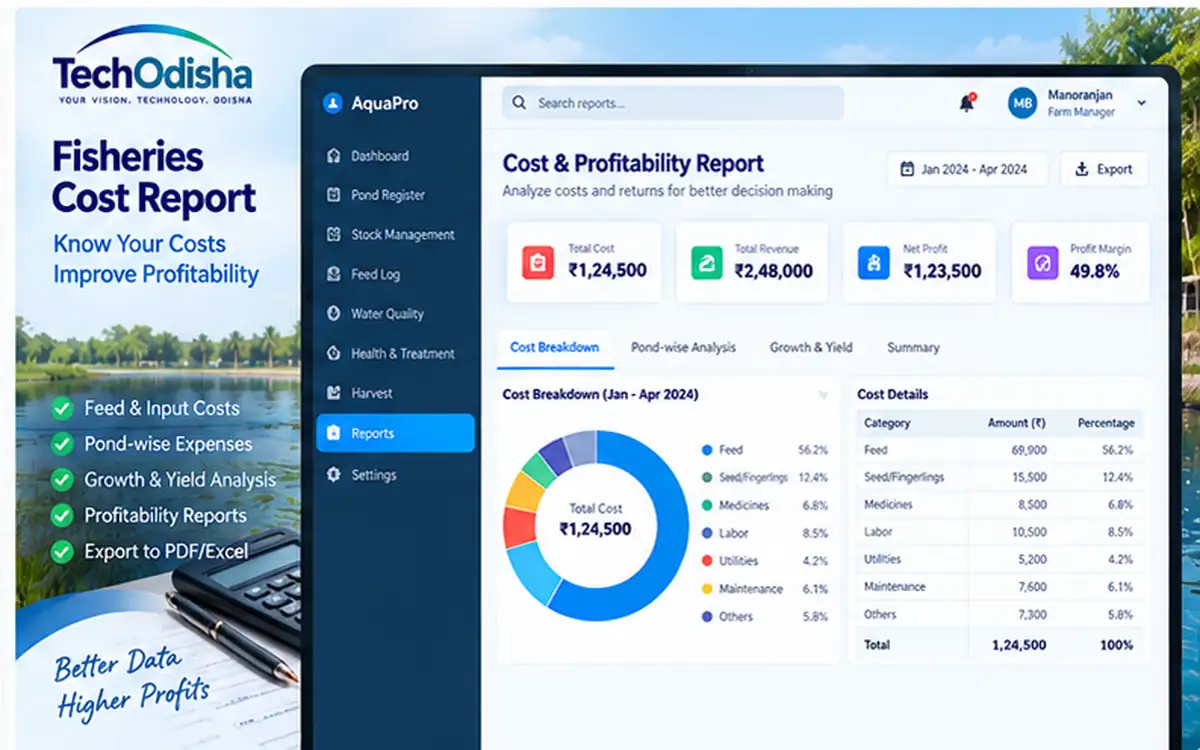
Inside the system
The four screens a farm manager uses most.
Questions people actually ask
Does this work for both brackish water and freshwater?
Yes. Species, stocking density, feed type and water parameters are all configurable, so the same system handles shrimp in brackish ponds and carp in freshwater.
Our staff are not comfortable with computers.
Daily entry is designed for a phone, in Odia, with very few fields — stock, feed, mortality, water reading. The detailed reporting is for whoever runs the office, not the person at the pond.
Can a cooperative manage many farmers on one system?
Yes. Cooperatives and federations can hold member records, individual pond allocations, input distribution and dues in one place, with per-member reporting.
Do we need IoT sensors to use it?
No. Sensors are optional. Manual water readings entered daily give you most of the benefit; sensors add continuous data and automatic alerts when you are ready.
Have a technology requirement?
From a single CCTV camera to software that runs a whole institution — tell us what you need and we'll tell you honestly whether we're the right fit.